
Cost-Effective Automation: Eva 2.0 for Small and Medium Enterprises
Small and medium enterprises in metal fabrication face a persistent dilemma: how to compete with larger manufacturers without massive automation investments. Traditional robotic welding cells demanded substantial costs, dedicated programming staff, and justified themselves only through high-volume production—luxuries most SMEs couldn't afford. The EVA 2.0 Robotic Welding Complex reshapes this equation by delivering industrial-grade automation at a scale and price point designed specifically for smaller operations, eliminating constant reprogramming requirements.
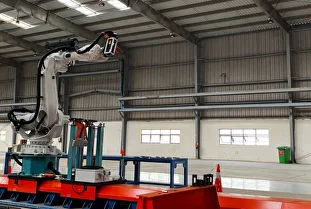
Breaking the Volume Barrier: Automation for Single-Unit Production
Conventional wisdom held that robotic welding only made economic sense for mass production. Modern intelligent systems challenge this paradigm through dynamic software that generates robot trajectories automatically from design files:
- Zero-reprogramming workflow for unique assemblies. Intelligent software reads directly from Tekla Structures and IFC files, automatically calculating optimal welding paths. Fabricators move from assembling an I-beam to a custom frame without manual intervention, treating each job as efficiently as repetitive production.
- Dramatic reduction in setup time between jobs. Automated trajectory planning compresses what previously took programmers hours into minutes, allowing SMEs to accept smaller orders that would have been economically unviable under traditional automation models.
- Integrated dimensional inspection before welding. Laser-based scanning systems capture actual component geometry, comparing measurements against design specifications to catch dimensional errors before they become expensive mistakes discovered after welding.
This transformation means SMEs no longer sacrifice flexibility for automation, operating with efficiency previously reserved for high-volume factories.
Real Numbers: Understanding SME Return on Investment
Modern robotic welding systems deliver value through multiple channels that compound over time, revealing why even modest-sized fabricators achieve rapid payback periods:
- Arc-on time increases from 20% to 60%+ of shift duration. Manual welders spend most time positioning parts and grinding—actual welding occupies barely a quarter of hours. Robotic systems maintain continuous arc-on time that triples effective output, a multiplicative gain impossible through incremental improvements.
- Quality consistency eliminates expensive rework cycles. Fabricators report 15-30% reductions in rework and scrap when transitioning to automated welding, with rejected assemblies becoming rare exceptions rather than regular occurrences.
- 24/7 production capability without overtime premiums. Robotic cells operate around the clock at the same cost per hour, allowing fabricators to meet tight deadlines without exponential labor cost increases that manual production requires.
- Short-term ROI through operational efficiency gains. The combination of increased throughput, reduced labor costs, and improved quality typically delivers payback periods measured in months rather than years.
These financial realities explain why automation adoption among SMEs accelerates—concrete operational data demonstrates rapid, measurable returns that improve competitive positioning immediately.
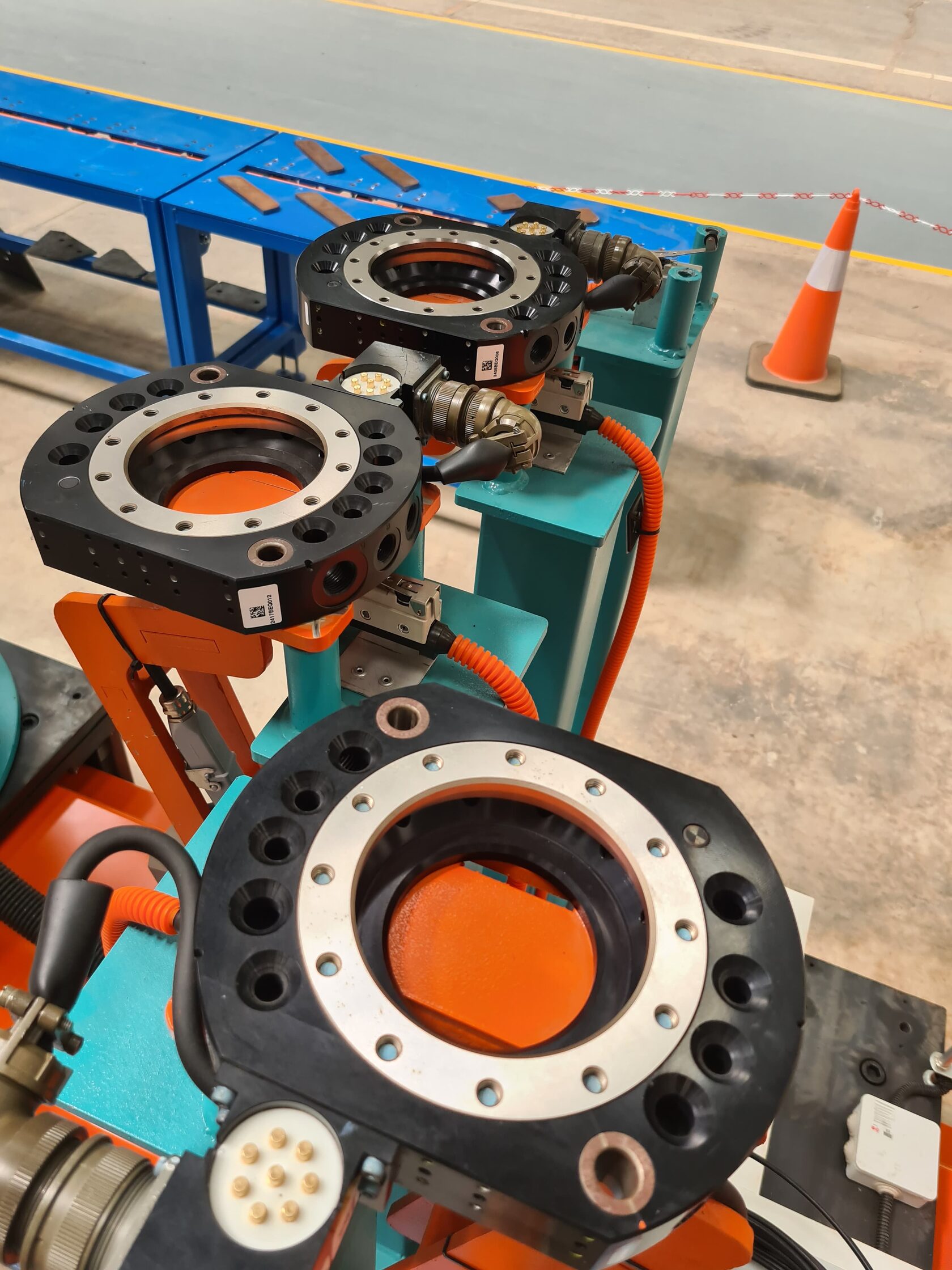
Technical Specifications That Matter to Small Fabricators
Modern robotic welding systems balance capability with the physical and economic realities of shops that can't dedicate entire buildings to single-purpose production lines:
- Beam capacity from 3,000mm to 12,000mm length. This range covers the vast majority of structural steel work—building frames, mezzanines, support structures—without requiring massive facility footprints that only large manufacturers can accommodate.
- Component handling from 75mm to 700mm dimensions. The same system handles everything from light architectural elements to heavy industrial components, maximizing utilization across varied project portfolios.
- 360-degree rotator for complete weld access. Automated rotation eliminates awkward overhead and vertical welding positions that slow manual operators, allowing downhand welding for most joints regardless of final assembly orientation.
- Multiple welding process compatibility. Different projects require different approaches—MIG/MAG for speed, laser welding for precision, multi-pass techniques for thick materials. Process flexibility prevents fabricators from turning away work outside a single method's capabilities.
These specifications represent deliberate design choices addressing the operational reality of small fabricators—systems that scale to typical shop capacities rather than demanding shops scale to accommodate oversized equipment.
The New Economics of Fabrication
The automation landscape for small and medium metal fabricators has fundamentally transformed. What once required choosing between manual flexibility and automated efficiency now offers both simultaneously through intelligent systems. The economic barriers that previously reserved robotic welding for high-volume manufacturers have collapsed as dynamic software eliminates programming overhead. For SMEs seeking competitive advantage, companies like Quant Robotics company (https://quant-robotics.com/) demonstrate that sophisticated technology can be scaled and designed specifically for smaller fabricators, opening efficiency gains to businesses of all sizes.
 Евгений Григорьев выпустил трогательную песню о настоящей любви
Александр Маршал и Владимир Ждамиров представили дуэтную песню «Пацаны»
Валерий Курас представил озорную песню «Сушнячок»
Максим Апрель презентовал новую песню «Майская роза»
Афина подарила новое звучание песне Кати Огонёк
Probabilistic AI Outputs vs Deterministic Marketing Promises